By Visiblo • 7 Jul 2026 • 12 min read
Generative Engine Optimization (GEO): The Complete Guide for 2026
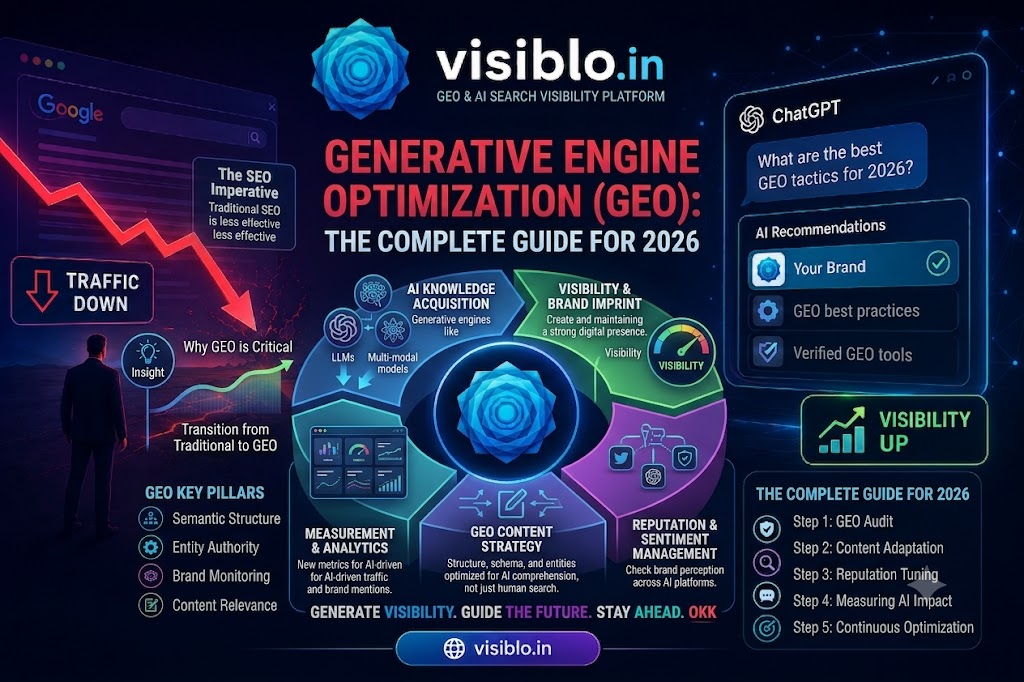
Generative Engine Optimization (GEO): The Complete 2026 Guide
Introduction
The search has moved into a whole new phase. Rather than showing users a series of links to click through, AI-based search engines are now providing full answers by collecting information from various reliable sources. Search engines such as ChatGPT, Google AI Overviews, Gemini, Perplexity, and Claude are redefining how users learn about brands, products, and services.
This paradigm shift has led to a new form of digital marketing technique called Generative Engine Optimization (GEO). While SEO concentrates on getting your brand on top in search engine results pages, GEO is concerned with making your content worthy of citation in AI answers.
For any business hoping to remain relevant in 2026 and beyond, GEO is non-negotiable.
What Is Generative Engine Optimization (GEO)?
The Generative Engine Optimization (GEO) involves optimizing your website to allow the use of your information in the generation of responses by the AI-powered search engines.
As opposed to just working towards gaining high ranking on search engine results page, GEO will help your brand get recognized as a reputable source from which recommendations can be made.
It's pretty straightforward: Visibility of your brand through AI-generated searches.
Why GEO Matters in 2026
User search behavior has changed dramatically. People now ask complete questions instead of typing short keywords.
For example:
Traditional Search:
Best AI SEO Tool
AI Search:
Which AI visibility tool is best for improving brand mentions in ChatGPT?
AI platforms provide direct answers, reducing the number of clicks to traditional websites. If your content is not optimized for AI search, your business may lose valuable visibility even if your SEO rankings remain strong.
Businesses investing in GEO today will be better prepared for the future of search.
GEO vs Traditional SEO
Although GEO and SEO work together, their objectives are different.
The most successful businesses combine SEO and GEO rather than choosing one over the other.
How AI Search Engines Choose Content
AI systems evaluate multiple factors before selecting information for their responses.
Some of the most important signals include:
Content Quality
AI prefers content that is original, informative, and written to genuinely help users solve problems.
Topical Authority
Publishing multiple high-quality articles around the same subject helps establish your website as an expert resource.
Website Trust
Secure websites with transparent business information, expert authors, and reliable sources are more likely to be referenced.
Structured Content
Well-organized pages with headings, lists, tables, and clear formatting are easier for AI systems to interpret.
Fresh Information
Regularly updated content is more valuable than outdated articles.
Best Practices for Generative Engine Optimization
1. Create Comprehensive Content
Cover topics in depth instead of producing multiple thin articles. Your content should answer both primary and related questions users may have.
2. Focus on User Intent
Understand what users actually want to know and structure your content around those needs instead of repeating keywords.
3. Build Topical Authority
Publish related content consistently within your niche. A cluster of high-quality articles signals expertise to AI systems.
4. Improve Technical SEO
Ensure your website loads quickly, works well on mobile devices, and has a logical internal linking structure.
5. Use Clear Content Structure
Organize information using descriptive headings, concise paragraphs, bullet points, comparison tables, and summaries.
6. Strengthen Brand Credibility
Maintain consistent business information across platforms, earn quality backlinks, showcase customer reviews, and highlight your expertise.
7. Update Existing Content
AI prefers current information. Refresh older articles regularly by adding new insights, statistics, and examples.
Common GEO Mistakes to Avoid
Many websites struggle with AI visibility because they make these common mistakes:
Publishing content only for keywords
Creating short, low-value articles
Ignoring technical SEO
Failing to update outdated content
Having inconsistent business information
Using poor content structure
Not building topical authority
Avoiding these issues improves your chances of being recommended by AI platforms.
How to Measure GEO Success
Unlike traditional SEO, GEO success is measured by visibility across AI-powered search experiences.
Key performance indicators include:
Brand mentions in AI-generated responses
Visibility in Google AI Overviews
AI citations
Growth in branded search traffic
Increase in organic engagement
Improved topical authority
Referral traffic from AI platforms
Monitoring these metrics helps you understand how effectively your GEO strategy is performing.
The Future of Generative Engine Optimization
In the wake of advancements in artificial intelligence, Generative Engine Optimization is bound to play a crucial role in any digital marketing strategy.
Organizations that focus on useful information, good technical optimization, and high brand authority will have a better opportunity to be selected among the AI answers.
The objective is not just to show up on the first page but to be one of the sources recommended by the AI.
Final Thoughts
GEO is changing how companies view online presence. Although SEO is still vital, it is not sufficient anymore. Businesses need to produce content which is credible, structured properly, and in line with how AI systems process and present it.
With the right GEO approach in place, a company can gain more visibility on the AI-enabled search platforms and improve their brand authority.