By Visiblo • 27 May 2026 • 25 min read
How AI Assistants Choose Which Brand to Recommend in Search Results
How AI Assistants Understand User Intent
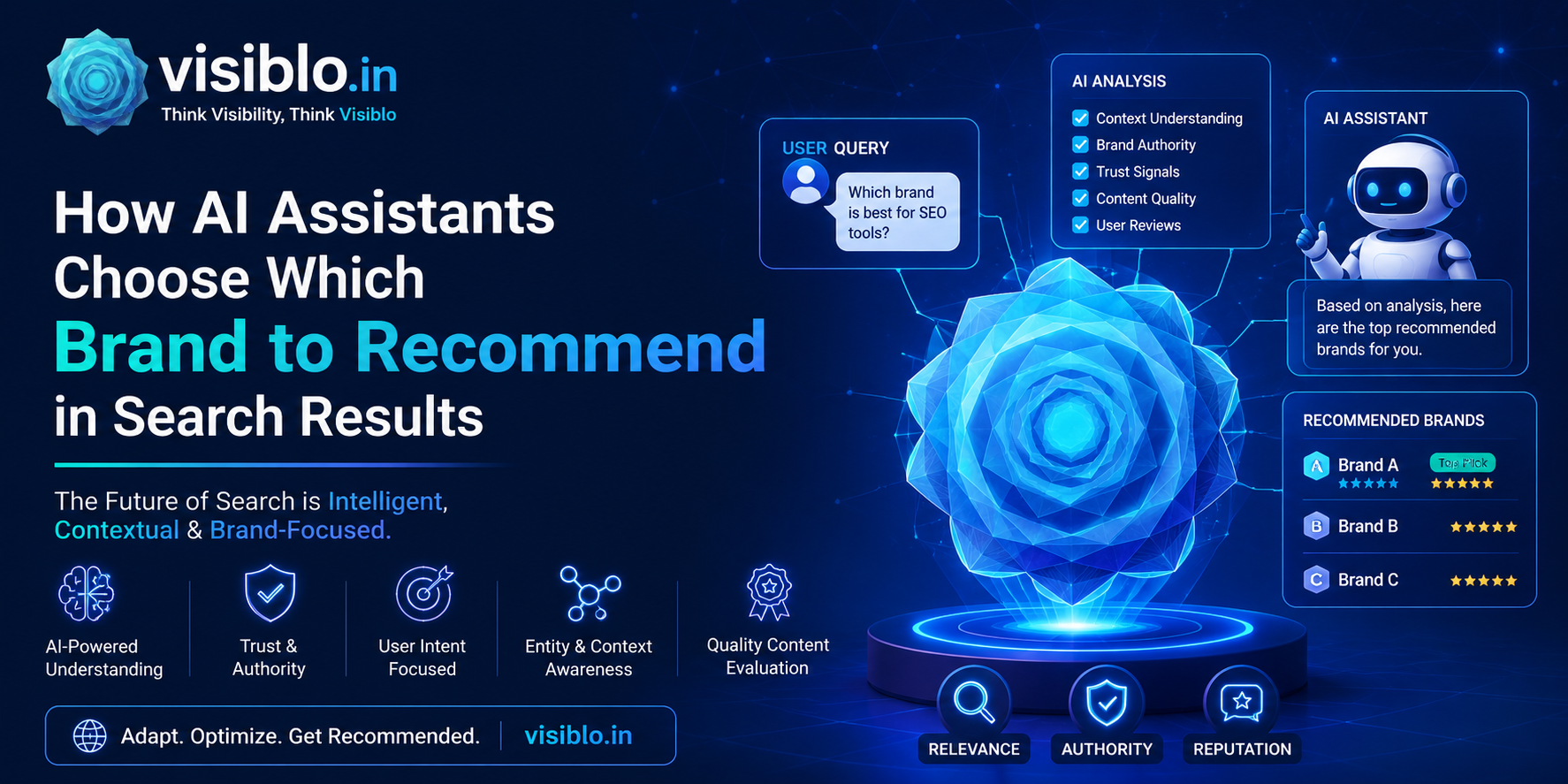
How AI Assistants Choose Which Brand to Recommend
Artificial Intelligence is transforming the way users discover brands online. Instead of showing only traditional search results, AI assistants now provide direct recommendations, summarized answers, and personalized suggestions.
Whether users interact with:
Google AI Search
OpenAI ChatGPT
Microsoft Copilot
Amazon Alexa
Apple Siri
AI systems are increasingly deciding which brands deserve visibility and trust.
This creates a major question for businesses:
How do AI assistants decide which brand to recommend?
The answer lies in a combination of authority, entities, trust signals, relevance, user intent, and semantic understanding.
The Shift from Search Engines to AI Assistants
Traditional search engines displayed a list of ranked webpages based largely on keywords and backlinks.
AI assistants work differently.
Instead of simply listing websites, they:
Understand user intent
Analyze context
Compare brands
Evaluate trustworthiness
Generate summarized recommendations
This means modern SEO is no longer just about ranking pages — it’s about becoming a trusted entity in the AI ecosystem.
What AI Assistants Actually Analyze
AI-powered systems analyze massive amounts of information before recommending a brand.
AI Brand Recommendation Concept

1. Brand Authority Is Critical
AI assistants prioritize trusted and recognizable brands.
Search systems evaluate:
Online mentions
Backlinks
PR coverage
Expert authorship
Industry reputation
Brand consistency
For example, when users search for “best SEO tools,” AI systems are more likely to mention well-established entities because they have stronger trust signals.
How to Improve Brand Authority
Publish expert content
Build high-quality backlinks
Get featured on authoritative websites
Maintain consistent branding
Increase social visibility
2. Entity Recognition Helps AI Understand Brands
Modern AI search relies heavily on entity-based understanding.
An entity can be:
A company
A person
A product
A service
A location
Search engines use knowledge graphs to connect relationships between entities.
When your brand becomes a recognized entity, AI systems can better understand:
What your business does
Your industry
Your services
Your expertise
Related topics
This increases the likelihood of being recommended.
3. Content Quality Influences AI Recommendations
AI assistants prefer content that is:
Helpful
Accurate
Detailed
Well-structured
Trustworthy
User-focused
Thin or overly promotional content performs poorly in AI-driven search systems.
High-Performing Content Usually Includes
Clear headings
FAQs
Expert insights
Updated information
Original research
Structured formatting
AI systems reward content that genuinely solves problems.
4. User Intent Matters More Than Keywords
Traditional SEO focused heavily on keyword matching.
AI assistants now focus more on:
Search intent
Context
Meaning
User behavior
For example:
“Best digital marketing agency for startups”
AI systems understand:
The user wants recommendations
The target audience is startups
The need may include affordability and scalability
This is why semantic SEO is becoming essential.
5. Reviews and Reputation Impact AI Trust
AI systems analyze public sentiment and reputation signals.
Positive indicators include:
Google reviews
Testimonials
Ratings
Brand mentions
Social discussions
Customer satisfaction
Brands with strong reputations are more likely to appear in AI-generated recommendations.
6. Structured Data Helps AI Understand Websites
Structured data (Schema Markup) helps AI systems identify:
Business details
Products
Services
Reviews
FAQs
Authors
Locations
This improves machine readability and increases visibility in AI-powered search experiences.
Important Schema Types
Organization Schema
Article Schema
FAQ Schema
Product Schema
Review Schema
AI SEO and Entity Authority

7. Topical Authority Builds Recommendation Power
AI assistants prefer brands that consistently publish high-quality content around a specific niche.
Example:
If a company regularly publishes expert content about:
AI SEO
Semantic search
Technical SEO
Content optimization
AI systems begin recognizing the brand as an authority in that field.
How to Build Topical Authority
Create content clusters
Cover topics deeply
Update content regularly
Link related articles internally
Publish industry insights
8. Website Experience Still Matters
AI systems also consider technical website quality.
Important factors include:
Mobile responsiveness
Fast loading speed
HTTPS security
Easy navigation
User engagement
A poor user experience can reduce trust signals.
How Businesses Can Increase AI Recommendations
Focus on E-E-A-T
Google emphasizes:
Experience
Expertise
Authoritativeness
Trustworthiness
These signals strongly influence AI-generated search visibility.
Optimize for Semantic SEO
Instead of repeating keywords, focus on:
Related concepts
User intent
Contextual relevance
Natural language
Strengthen Your Digital Presence
Build visibility through:
PR campaigns
Social media
Podcasts
Industry publications
Guest blogging
Create AI-Friendly Content
Use:
Structured headings
FAQs
Bullet points
Clear explanations
Conversational language
This improves AI understanding.
The Future of AI Brand Recommendations
AI assistants are becoming more intelligent every day.
Future search experiences will increasingly rely on:
Personalized recommendations
Conversational AI
Predictive search
Voice interactions
Entity-based ranking systems
Businesses that focus on trust, authority, and semantic optimization will gain stronger visibility in AI-generated search results.
Final Thoughts
AI assistants do not randomly recommend brands. They analyze authority, relevance, trust, reputation, entities, and user satisfaction before generating answers.
To succeed in the AI search era, businesses must move beyond traditional SEO and focus on becoming a trusted digital entity.
Brands that invest in:
High-quality content
Entity SEO
Structured data
User experience
Topical authority
Reputation management
will have a much higher chance of being recommended by AI systems.
FAQs
Why do AI assistants recommend certain brands?
AI assistants recommend brands based on authority, trust, relevance, content quality, and semantic understanding.
What is entity SEO?
Entity SEO focuses on optimizing recognizable concepts, brands, and relationships rather than only targeting keywords.
Does brand reputation affect AI search visibility?
Yes, positive reviews, mentions, and trust signals significantly impact AI recommendations.
How can businesses improve AI visibility?
Businesses can improve visibility through semantic SEO, structured data, expert content, and strong brand authority.
Is traditional SEO still important?
Yes, but modern SEO now combines keywords, entities, user intent, and AI optimization strategies.