By Visiblo • 30 Apr 2026 • 18 min read
What is Generative Engine Optimization (GEO)? A Complete Guide to Ranking in AI Search
Why GEO Matters in the Age of AI Search
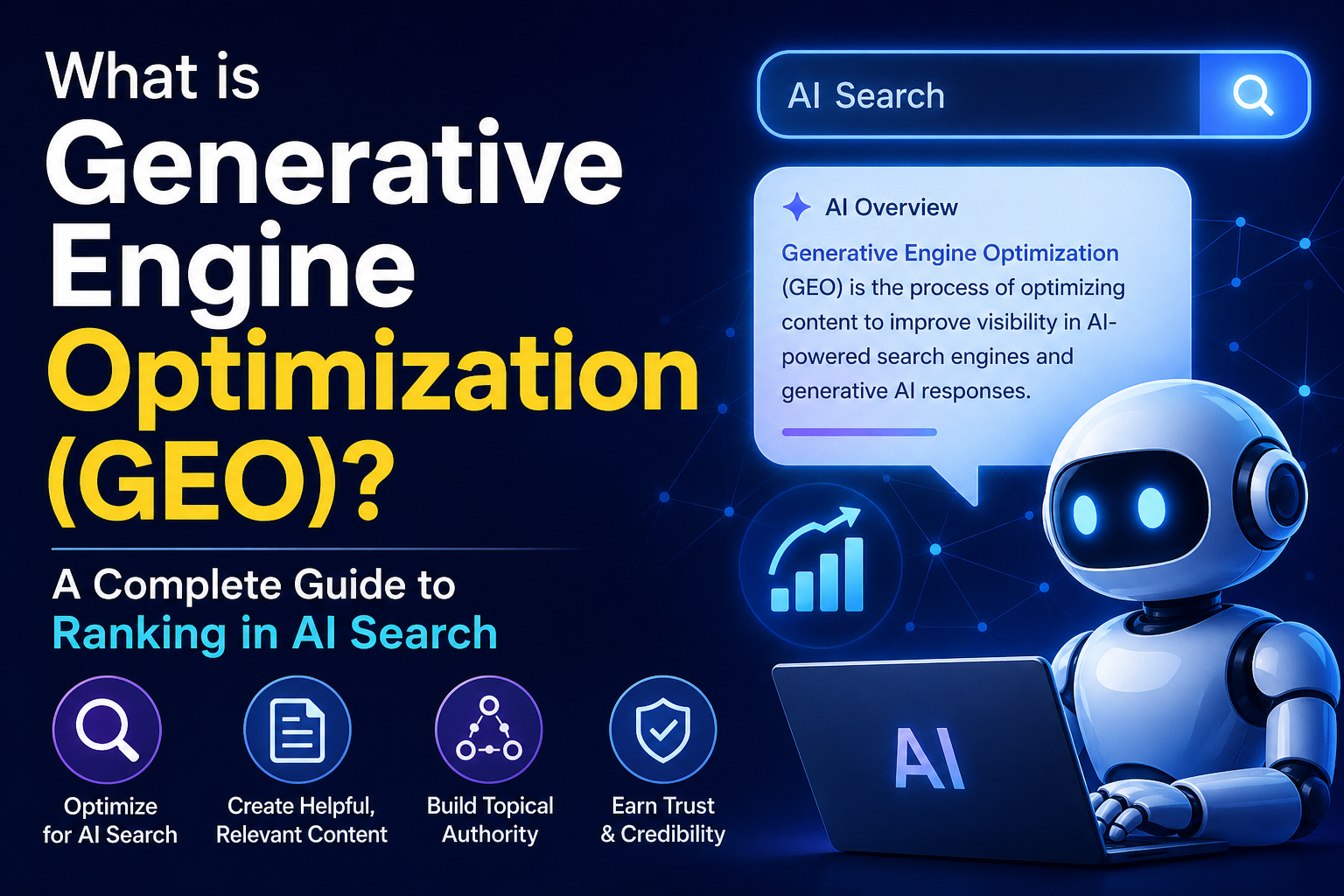
What is Generative Engine Optimization (GEO)?
The process of optimizing content for AI-powered search engines like ChatGPT, Google SGE, Gemini, and Perplexity AI is called Generative Engine Optimization (GEO). This makes sure that your brand, website, or content shows up in AI-generated answers.
Generative Engine Optimisation (GEO) is different from traditional SEO (Search Engine Optimization) because it doesn't just try to get your site to show up in Google search results. It also tries to get your site to show up in AI-generated answers.
For example:
User asks ChatGPT: Best digital marketing agency
AI generates answer mentioning Top brands
If your brand appears in that AI response → That's GEO success
How Generative Engine Optimization (GEO) Works

Generative Engine Optimization works in 3 steps:
1. AI Crawls Content
AI models scan:
Websites
Blogs
Forums
Reviews
Business listings
Social media
2. AI Understands Authority
AI looks for:
Expertise
Brand mentions
Author credibility
Content quality
3. AI Generates Answer
AI comes up with answers by putting together high-quality content from reliable sources.
AI will include your brand if your content is optimized.
Why Generative Engine Optimization (GEO) is Important
Generative Engine Optimization (GEO) is becoming more important because AI search is taking the place of regular search.
Example Platforms Using AI Search
ChatGPT
Google SGE
Gemini
Perplexity AI
Microsoft Copilot
These platforms generate answers directly, reducing clicks to websites.
That means:
Less traditional SEO traffic
More AI visibility required
GEO becomes essential
Key Components of Generative Engine Optimization (GEO)

1. High Quality Content
AI prefers:
Long-form content
Expert-level content
Updated content
Structured content
Example:
Bad Content
"SEO is important"
Good GEO Content
"Generative Engine Optimization (GEO) helps brands appear in AI-generated answers by improving content authority and semantic relevance."
2. Brand Authority
AI trusts:
Recognized brands
Expert authors
Verified companies
Ways to build authority:
Publish blogs
Guest posting
PR mentions
Business listings
3. Entity-Based Optimization
AI identifies:
Brand name
Author name
Company name
Product name
Example:
Instead of writing:
"Best marketing tools"
Write:
"Best marketing tools like HubSpot, SEMrush, and Ahrefs"
This improves AI recognition.
GEO Optimization Strategies
1. Write AI-Friendly Content
Use:
Headings
Bullet points
Simple explanations
FAQs
AI prefers structured content.
2. Use Conversational Keywords
Example:
Traditional SEO Keyword: "Digital marketing agency"
GEO KeywordThe best digital marketing company for new businesses
AI search is based on questions.
3. Build Multi-Platform Presence
Your brand should show up on:
Blogs, forums, and directories
Online social networks
Sites that report news
AI gets information from a lot of different places.
Example of GEO in Action
User Query:
"Best SEO tools for beginners"
AI Response:
Ahrefs
SEMrush
Ubersuggest
Your brand
If your brand appears → GEO success
Benefits of Generative Engine Optimization (GEO)
SEO plan that will last for a long time
Growth of brand authority
More visitors from search engines
An edge over the competition
Future of Generative Engine Optimization

AI search is growing rapidly.
Future trends:
AI replacing traditional search
Voice search growth
Zero-click search increase
Companies investing in Generative Engine Optimization (GEO) today will dominate tomorrow.
Final Thoughts
Generative Engine Optimization (GEO) is the next step in the evolution of SEO.
Businesses need to optimize for AI engines as well as Google.
You get the following if your brand shows up in AI-generated answers:
More attention
More faith
More cars on the road
GEO is no longer an option; it's the future of digital marketing.